DESN 130 — DESIGN DRAWING FOR INTERIORS I  |  FALL 2019  |  T/TH 4:00–6:45PM  |  ROOM #

P4B | RESTAURANT BAR (Interiors)

PROJECT OVERVIEW

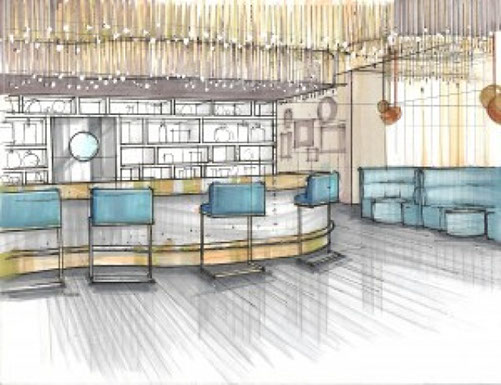
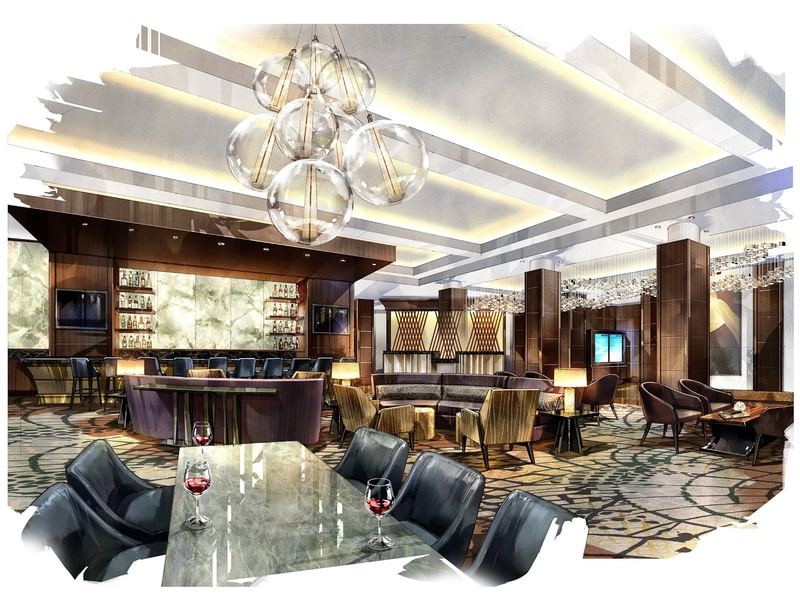
For this project students are challenged with designing a Bar Area
in a restaurant/bar using 2-point perspective.

Design a bar for a unique environment with a specific aesthetic theme
based on: Sophisticated modern, Chic, Modern-rustic, Bohemian, 60/70s Pop, Steam punk, Art deco, Arte nouveu, or based on a specific cultural experience such as Cuban, Ethiopian, Moroccan, a cultural-American fusion, French-bistro, etc. Your theme or concept should be clear in execution.

Use your understanding of the basic primitive or formal volumes and corresponding rules that have been established to serve as a principal foundation in design drawing and sketching, ie. ellipse logic for vertical cylinders vs. horizontal.

Interiors are populated with furniture based on these principal shapes, proportions, and material combinations, all of which have core form logic based on the basic primitives. For example, chairs and stools are based on cubes; lamp shades may be somewhat like a cone or cylinder; vases are
often cylindrical, conical, or inverted pyramidals, etc..

Industrial Designers, Interior Designers, Architects, etc. may be called upon to design everything from the lamps, the furniture, product packaging, table settings, glassware, etc.

Every form we are familiar with is always based on our 6 primitive forms,
even 3-Dimensional lettering such as in environmental graphic design and display systems.

The common (typical) height of a bar is approximately 40-42" with a standard bar stool seat of 28-30". These should anchor your design, but you may make conscious and deliberate variations.

Use an eye level of 5', typical.

Ceiling height is up to the designer and determined by your established context, such as on a Boeing 747, you can't have a 20' ceiling.

Students will have no time to waste on this project. There is a lot to do.

STUDENT LEARNING OBJECTIVES (SLOs)

See main page

GRADING AND EVALUATION RUBRIC

See main page


SCHEDULE

Week 1: Research and Base 2-pt Perspective system construction

Week 2: Apply details including Materiality, shadow casting, and reflections. Graphite Pencil rendering study, Marker
vignette (small areas) studies

Week 3: Rendering with Markers

RESEARCH, FORM GENERATION & COMPOSITION

Research and create a "collage board". You do not need to paste-up on foam-core, but you should print photos for reference, OR create a PINTEREST board. Obtain photos of luxurious and/or stylish restaurants and bars, hotel cocktail bars, etc. to use as a visual reference in your own design.

No dive bars, college drinking bars, generic pubs, or sports bars.

Establish an imagined location for your bar, such as urban, coastal overlook, mountain resort, Carribean or SE Asia resort, Newport Coast, on a Boeing 747 Dreamliner, etc. Be specific.

You may choose a scene from a well known work of literature or science-fiction writing and propose the bar scene for it; entertainment design. If it is
a well known scene such as the bar scene in Star Wars, be sure to make it your own unique design, not merely a copy of what was already created.

You may choose to do a non-alcoholic bar such as a tea-, coffee-, sushi-, juice-, or hooka bar. Should you choose a traditional Vietnamese Tea experience, for example, then the standard bar/bar stool height makes no sense as the experience is set sitting on the floor. Address unique and specific aspects of your design as necessary. Eye level (HL) will still need to be at 5'.

You are being empowered to make critical thinking choices. Does a
20' ceiling height make sense on a 747? No. Be sure your drawing can validate your design choices.

RENDERING

Using Color along with Grey markers render your space and add finishing details with Prismacolor pencils.

Your bar space must have textures and details on all walls, ceiling, and floor.

Your space must have materials with the following contrasting qualities, and/or materiality changes:

Matte surfaces; Polished/Chrome surfaces; Opaque surfaces; Transparent surfaces; Rough surfaces (Remember, rough will affect the profile of the surface); and Smooth surfaces.

Develop several "first drafts" using graphite or similar media to explore textures, composition of the space, etc. Do not be limited by having only one idea. You will be expected to make design changes along the way.

DELIVERABLES

Final on 2 - 14x17" Marker paper or Trace paper sheets to include

1- Floor Plan, Rendered, scale to match Elevations

2- Interior Elevations, Rendered, scale to match Elevations

1- 2-pt Perspective, Rendered

Include name in professionally crafted Designer's lettering. Poor lettering will result in a full grade reduction.

Include a title for your Bar, such as Xen Bar, etc. Be creative yet concise; long names or overly complex names are difficult to brand.

REFERENCES AND INSPIRATION

Google, bar and lounge designs

Gjelina, Venice Beach

Church & State, Downtown LA, Arts District

Havana, Costa Mesa

Seventh Tea Bar, Costa Mesa

Brasserie, NY. Diller Scofidio + Renfro

Standard Hotel, Downtown LA and Hollywood

Fuego at Hotel Maya, Long Beach

The Other Room, Venice Beach

Intelligentsia Coffee Bar, Venice Beach, Pasadena, LA, etc.

EXAMPLES, GETTING STARTED

The study on the right is a strong rough
sketch, working out and capturing a scene.
The construction drawing below is a strong
1-pt perspective and establishes basic organization
and system control, but we can see clearly this
is a sushi bar in development.

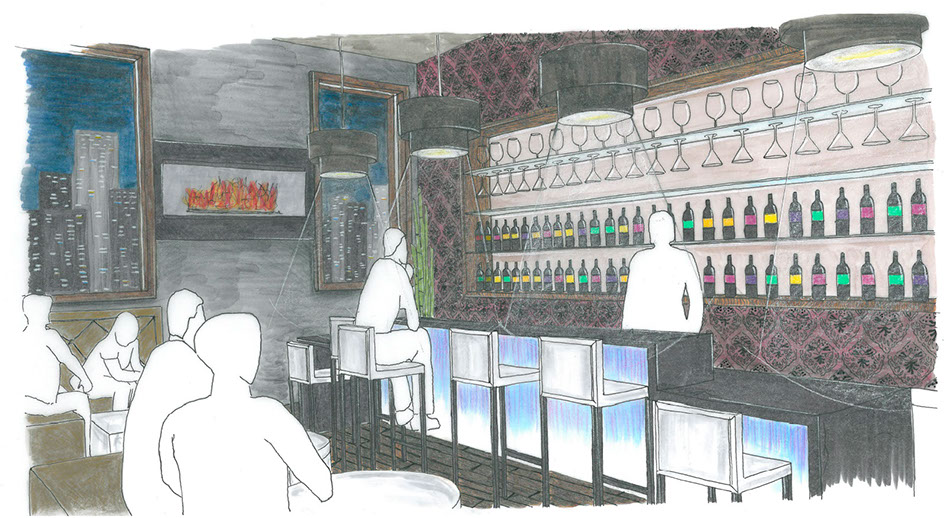
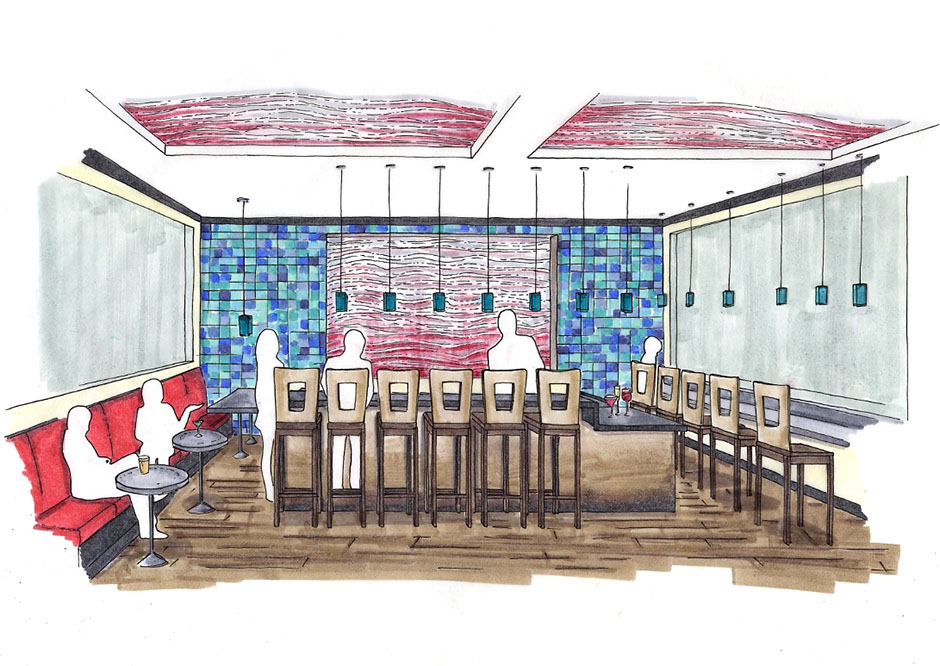
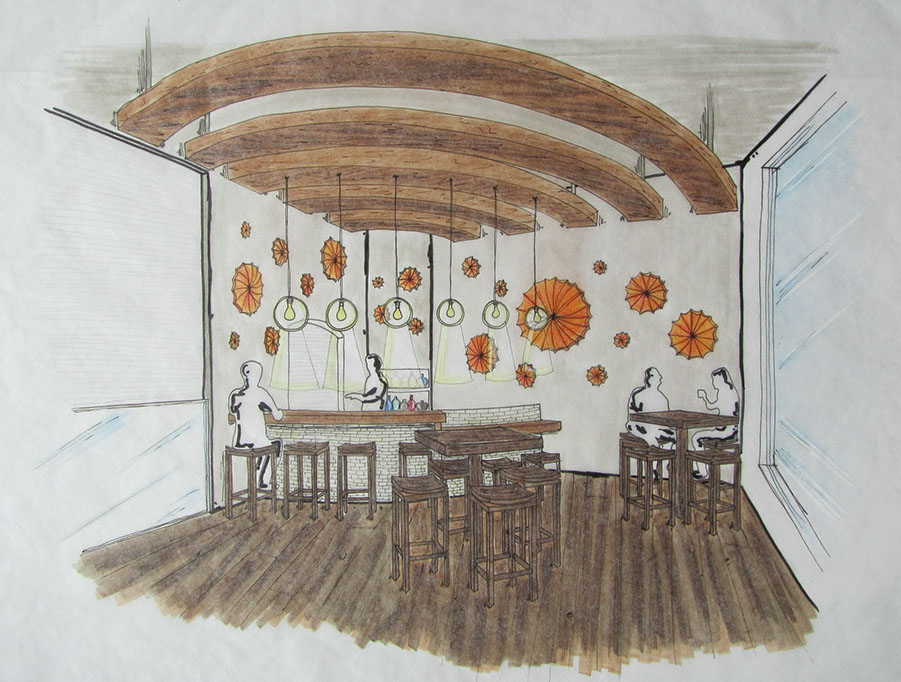
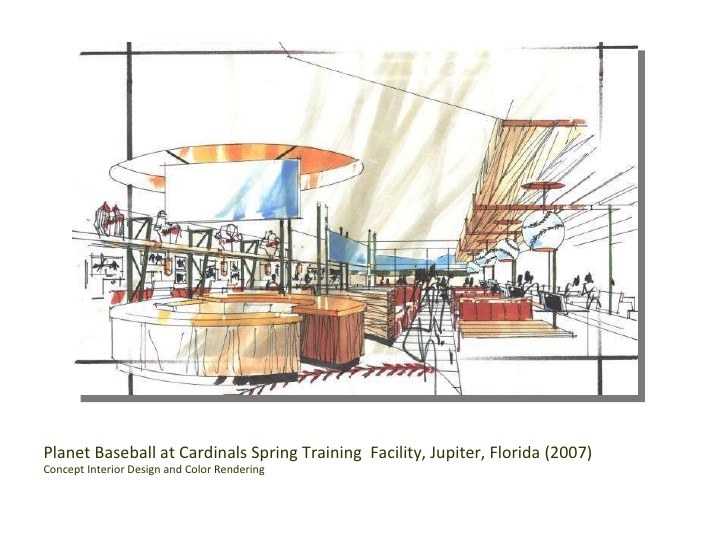
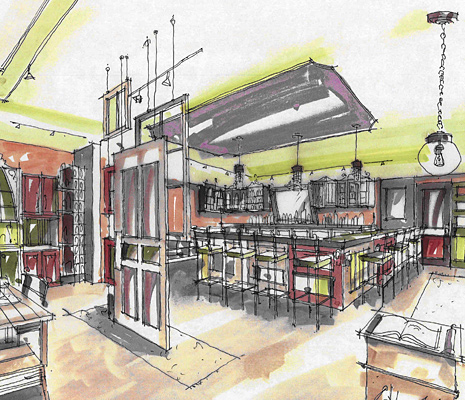
EXAMPLES, FINISHED RENDERINGS
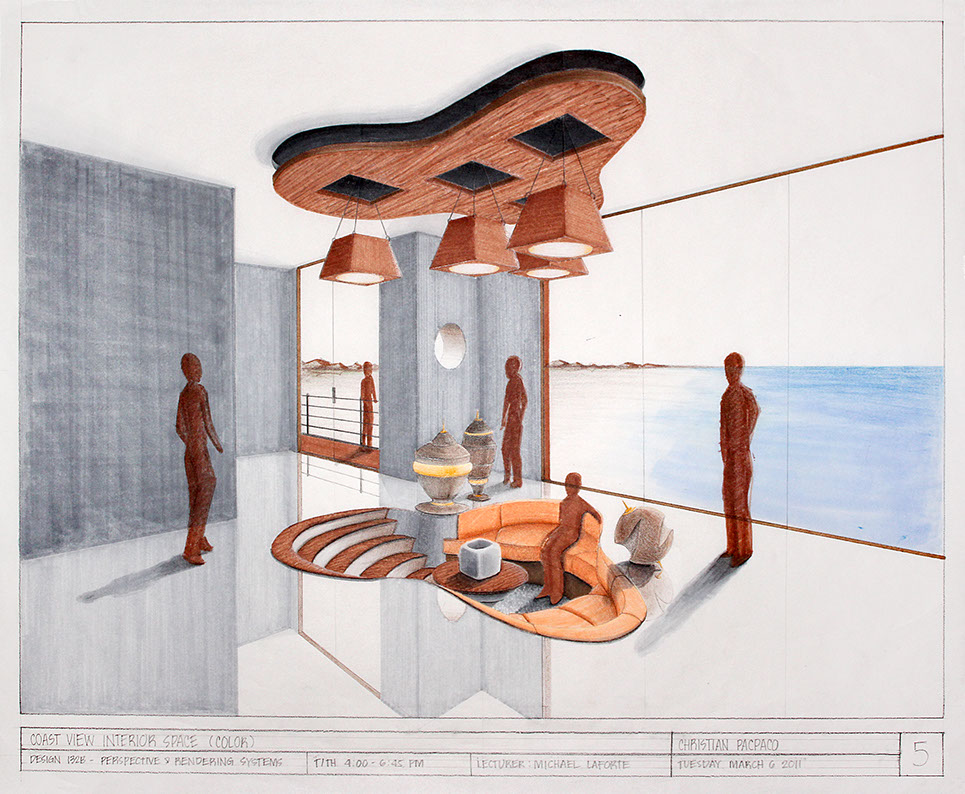
Christian Pacpaco. Marker and prismacolor pencil on marker paper.
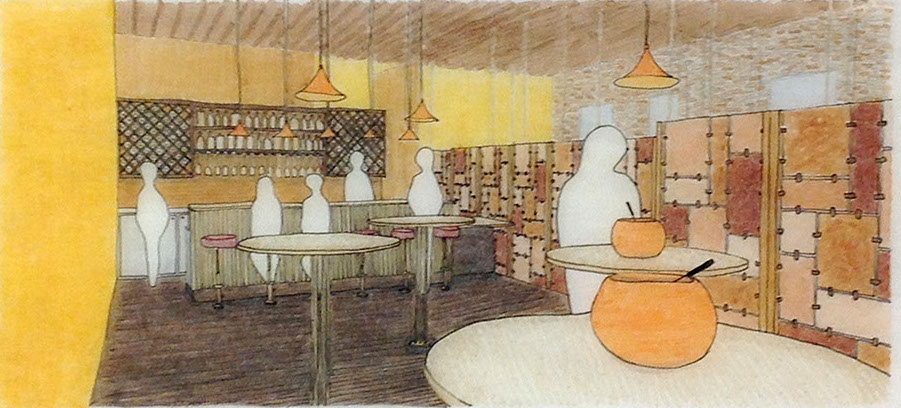
Tom Spayde. Planet Baseball at Cardinals Spring Training Facility, Jupiter, FL. 2007
* Estimate only. See instructor and calendar for specific due dates. Summer Session schedule is more compressed with one week equal to approximately two and half semester weeks.

Questions, feedback, suggestions?
Email me with your recommendations.

©2020 Michael LaForte / Studio LaForte, All Rights Reserved. This site and all work shown here is purely for educational purposes only. Where ever possible student work has been used or original works by Michael LaForte.
Works by professionals found online or in publication are used as instructional aids in student understanding and growth and is credited everywhere possible.